 blue sky chimney cleaningblue sky chimney cleaning
Clean flues, clear skies over Charlotte
A chimney sweep in Charlotte clears creosote, soot, and nesting debris from your flue and inspects the system before you light the first fire of the season. Homeowners searching for a chimney sweep near me across Downtown Charlotte, Willow Oak, and Fairview usually need one of two things: a routine cleaning and safety check, or a repair for a smoking, leaking, or damaged chimney. We handle both, plus wood stove and gas log service, and confirm the exact price on-site before any work starts.
Call (980) 452-9610
Tell us about your chimney sweep job — we'll get you a fast quote.
A firm, all-in price confirmed before we start — no surprises.
On time, done to standard, and tidy when we leave.
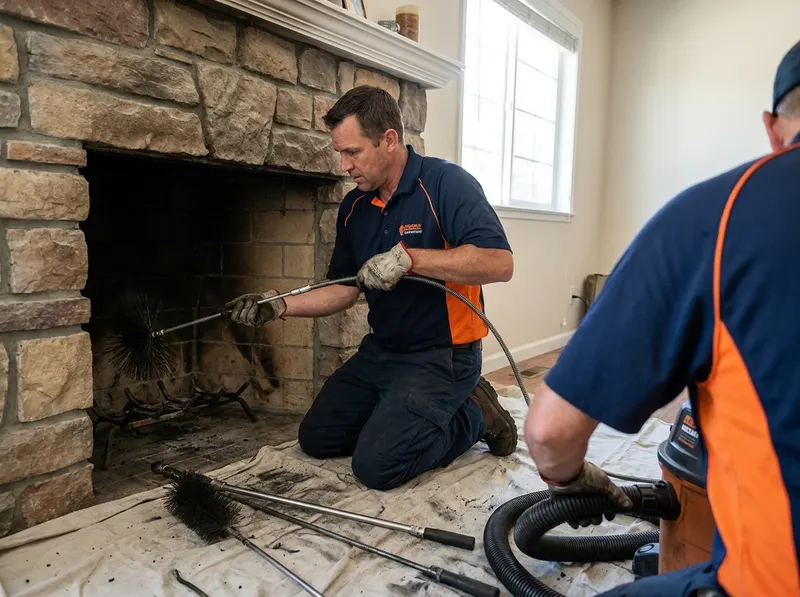
A chimney sweep matters most in Charlotte because wood-burning season here concentrates into the cool, damp stretch from late fall through early spring, when Yolo County valley fog settles in and fireplaces run for weeks at a stretch. Steady burning builds creosote on the flue walls, and creosote is the fuel behind chimney fires. Homes in older parts of Downtown Charlotte and Willow Oak often have masonry fireplaces with clay-lined flues that collect glazed creosote, while newer builds in Sunrise Estates and Countryside tend to run prefab metal fireplaces that sweep differently. Both benefit from a cleaning before the heavy-use months.
A standard sweep fits a chimney used for a season of ordinary wood burning: light-to-moderate soot, a flue that draws well, and no visible damage. If smoke has been backing into the room, the damper sticks, or you hear or see animal activity, that points toward inspection or a repair rather than a plain sweep, and it is worth saying so when you call so the right work gets scheduled. The trade-off is straightforward — a sweep is the low-cost maintenance step that keeps a working fireplace safe, while a full inspection is the diagnostic step for a fireplace that isn't behaving. Many Charlotte homeowners in Fairview and Oak Grove pair a sweep with a quick inspection once the tech is on the roof and at the firebox.
Access drives both time and price. Single-story homes near Charlotte Community Park with a straightforward flue are quick. Two-story homes in Creekside and Meadowbrook, steeper roof pitches, or offset flues take longer and add to the ballpark. Rain caps and spark arrestors are checked during the sweep, which matters in the dry Cache Creek corridor where a missing arrestor raises ember risk. Drop cloths and containment keep soot off floors, so the work stays clean indoors.
Wood stove flues and inserts connected to a chimney are cleaned as well, though heavily glazed creosote sometimes needs more than a routine brushing. Pricing on that is confirmed once the flue condition is seen in person — no exact figure is promised sight-unseen.
| Standard single-flue fireplace sweep | $150–$225 |
| Two-story or difficult-access chimney sweep | $225–$325 |
| Wood stove or insert flue cleaning | $175–$300 |
| Sweep paired with visual inspection | $225–$375 |
Chimney cleaning in Charlotte typically runs $150 to $325, with $150 as the minimum charge for the simplest single-flue sweeps. Two-story homes and difficult roof access sit at the higher end. The exact price is confirmed on-site once the flue and access are seen.
Most Charlotte fireplaces used through the fall and winter season should be swept once a year. Homes in Willow Oak and Downtown Charlotte that burn wood heavily may need it sooner, since creosote builds faster with frequent use.
Yes. Prefab metal fireplaces common in newer Charlotte neighborhoods such as Countryside and Sunrise Estates are cleaned using methods suited to metal flues rather than masonry. Tell us the fireplace type when booking so the visit is set up correctly.
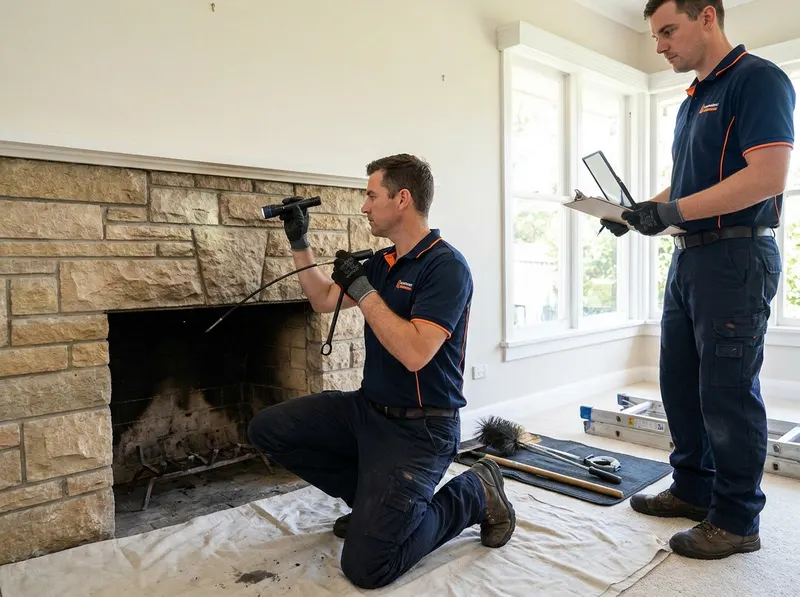
A Level 1 inspection is the right fit for most Charlotte homeowners who use the same fireplace or wood stove year after year without changes. It applies when the appliance and how you burn have stayed the same, and no major issue has been reported. The inspector reviews the parts you can reach and see without tools or dismantling: the visible flue, the firebox, the damper, and the connector joints. It is the standard yearly check recommended alongside routine sweeping for older brick fireplaces common in Downtown Charlotte and the established homes around Willow Oak and Fairview.
Choose a Level 1 when nothing has changed and you simply want confirmation the chimney is safe to use. Step up to a Level 2 instead when you are buying or selling a home, after a chimney fire or earthquake, or when you switch fuels or install a new appliance — that level adds a camera scan of the full flue and checks accessible attic and crawlspace areas. The trade-off is straightforward: a Level 1 is faster and lower cost but only covers what is readily visible, so hidden flue cracks behind a wall would not be caught. For a two-story home in Sunrise Estates or a rental changing hands in Oak Grove, a Level 2 is usually the safer call.
Charlotte's mild winters mean many fireplaces here run only a handful of cold nights, which can lead owners to skip yearly checks. Even light use leaves creosote and lets birds or debris settle in an idle flue, so an annual Level 1 still matters for homes in Creekside, Meadowbrook, and Countryside. Homes near the open ground by Willow Oak Nature Preserve and Cache Creek tend to collect more windblown debris and nesting material at the chimney cap, which a visual inspection will flag. After the inspection you receive a plain written summary noting what was checked and any concern worth watching.
| Level 1 inspection (standard single flue) | $150-$225 |
| Level 1 inspection with same-visit sweep | $225-$375 |
| Additional flue on same property | From $150 |
Most Level 1 inspections in Charlotte take 30 to 60 minutes. Time depends on chimney height, access, and whether a sweep is combined with the visit.
A Level 1 inspection fits Charlotte homes where the fireplace and its use have not changed. Choose a Level 2 when buying, selling, changing fuels, or after a chimney fire or earthquake.
Level 1 inspections in Charlotte start at a $150 minimum and commonly run $150 to $225. The exact price is confirmed on-site before any work begins.
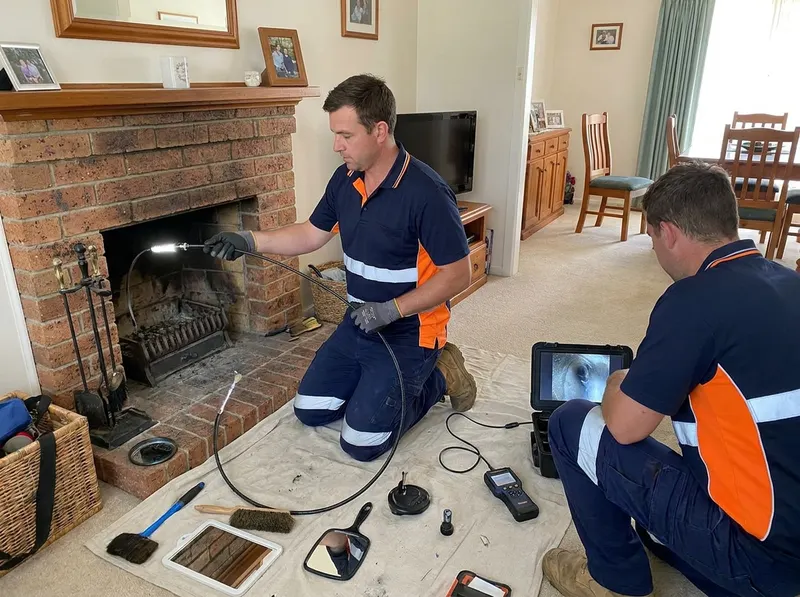
A Level 2 inspection is the right choice when something has changed or is about to change with the chimney system. Real estate transactions across Downtown Charlotte and established streets in Fairview and Oak Grove routinely call for one before closing, because buyers and agents want the flue interior documented, not just the visible masonry. If a home has an older brick chimney common in the Willow Oak and Countryside areas, the video scan often reveals liner shrinkage or mortar joint separation that a surface look would miss.
Choose a Level 2 over a basic Level 1 when you are buying or selling, when there has been a chimney fire or a strong storm, or when you switch appliances or fuel. A Level 1 visual check suits routine annual verification on a system with no changes and no known problems. The trade-off is scope: the Level 2 costs more and takes longer because of the internal camera run and the added structural areas reviewed, but it produces the flue-condition evidence a sale or an insurance claim usually requires. For homes near Cache Creek and the lower-lying stretches around Creekside and Meadowbrook, seasonal moisture makes flashing and crown documentation especially worth having in writing.
Charlotte's mix of housing stock shapes what the scan tends to find. Newer builds in Sunrise Estates often have factory-built metal flues where the concern is connector fit and clearance, while the older masonry near the Charlotte Public Library and around the Yolo County Fairgrounds is more likely to show clay tile cracking or spalling. We adjust the review to the system in front of us rather than running a fixed script. Access matters too: a steep or tall roofline, a capped-off flue, or a tight crawl space can add time, and we flag any area that cannot be safely reached rather than guessing.
Every Level 2 inspection ends with a written report describing what was checked, the flue condition, and any recommended follow-up. Prices are ballparks tied to flue count, height, and access; the exact figure is confirmed on-site before work begins, and the $150 minimum applies to every visit including a single-flue home.
| Single-flue Level 2 inspection with video scan | $150-$225 |
| Multi-flue or tall/complex system | $225-$325 |
| Level 2 for real estate transaction (with report) | $175-$300 |
| Post-chimney-fire evaluation | $200-$325 |
You need a Level 2 inspection in Charlotte when selling or buying a home, after a chimney fire or major storm, or when changing the appliance or fuel type. These situations require the interior flue documentation that a basic visual check does not provide.
Yes. A Level 2 inspection in Charlotte includes a video scan of the flue interior, which is the main feature that separates it from a Level 1 visual-only check. The scan captures liner cracks, gaps, and creosote buildup along the full flue.
A Level 2 chimney inspection in Charlotte typically runs $150 to $325 depending on flue count, height, and access. The $150 minimum applies to every visit, and the exact price is confirmed on-site before any work starts.
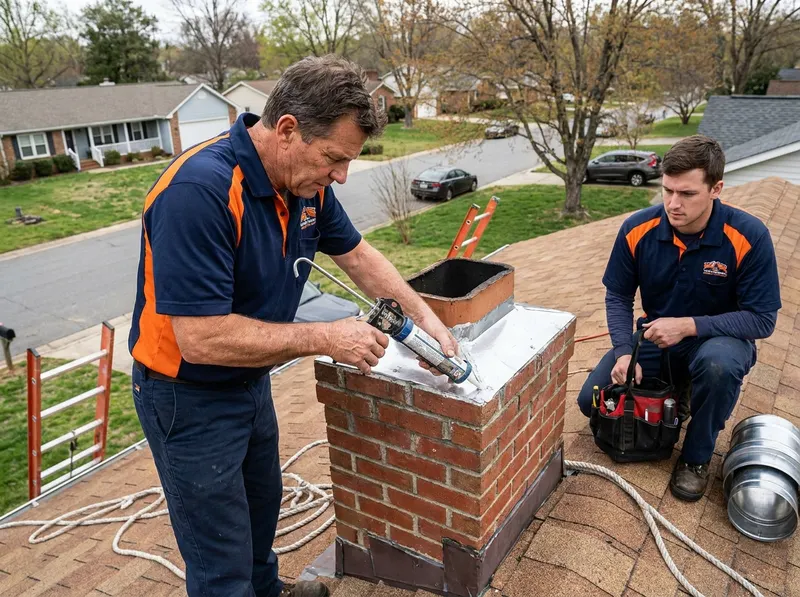
Charlotte chimneys leak most often through the crown and the flashing, not through the flue itself. Crowns crack under the freeze cycles and dry-heat swings that hit older homes around Downtown Charlotte and Fairview, and once a crown has hairline cracks, rain works its way straight into the masonry below. Flashing—the metal seal where the chimney meets the roof—loosens or corrodes over time, and that is a common culprit on the pitched roofs common in Oak Grove and Sunrise Estates. We diagnose the actual entry point before quoting, because sealing the wrong spot wastes your money and lets the leak continue.
Chimney leak repair is the right call when you see water stains on the ceiling near the chimney, a musty smell after rain, white powdery deposits on the brick, or rusty streaks inside the firebox. If the brick itself is crumbling across a wide area or the crown has broken apart, the fix moves from a sealing repair toward a partial rebuild—more involved, but still cheaper than replacing water-damaged framing and drywall later. The trade-off is straightforward: a targeted seal is fast and affordable, while ignoring a leak lets moisture spread into the surrounding structure, which costs far more to correct.
Proximity to water and tree cover matters here. Homes near Cache Creek and the Willow Oak Nature Preserve tend to hold more ambient moisture, and heavy canopy around Creekside and Meadowbrook keeps roofs damp and slow to dry, which accelerates crown cracking and flashing failure. We factor those conditions into the repair, favoring breathable masonry sealers that shed water without trapping it inside the brick. For newer builds in Countryside, leaks more often trace back to caps and factory flashing details rather than aged masonry.
Every job starts with a free on-site diagnosis. We identify the source, explain what we found in plain terms, and give you a firm ballpark before any work begins. Exact pricing is confirmed on-site once the entry point is confirmed, since a single cracked crown and a full flashing reseal are very different scopes.
| Leak diagnosis and minor sealant repair | $150–$300 |
| Chimney crown patch or resurfacing | $250–$650 |
| Flashing reseal or replacement | $300–$750 |
| Masonry waterproofing (chimney exterior) | $250–$550 |
| Chimney cap replacement | $150–$400 |
| Combined crown and flashing repair | $500–$850 |
We inspect the crown, flashing, cap, and brick on your Charlotte chimney from the roof and interior, tracing the stain back to the actual water entry point. Because one ceiling stain can come from several failures, we confirm the source before recommending any sealing or repair.
Most chimney leaks in Charlotte start at a cracked crown or failed flashing rather than the flue. Freeze-and-heat cycles crack crowns on older homes near Downtown Charlotte and Fairview, while damp, shaded roofs in areas like Creekside and Meadowbrook accelerate flashing corrosion.
Chimney leak repair in Charlotte typically runs $150 to $850, with $150 as the minimum charge. A minor crown patch or cap replacement sits at the low end, while combined crown and flashing work reaches the upper range. The exact price is confirmed during a free on-site diagnosis.
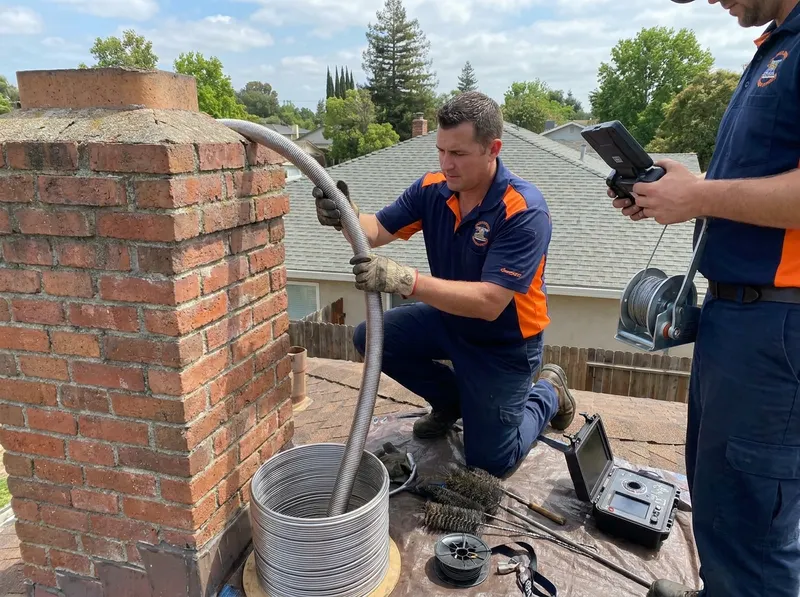
Relining is the right call when a level-two inspection finds cracked, spalled, or shifted clay tiles, or when a flue has no liner at all. Older masonry chimneys around Downtown Charlotte and the established lots near Willow Oak often have unlined or aging clay-tile flues that were never matched to a modern insert. A stainless steel liner restores a smooth, correctly sized path for smoke and gases, which improves draft and protects the surrounding masonry and framing from heat and acidic condensate.
Relining differs from a simple sweep or a minor repair. A sweep removes creosote and soot; relining rebuilds the pathway itself. If your inspection shows only surface buildup, you likely need cleaning, not a liner. If it shows a broken tile joint, a gap that lets flue gases reach brick, or a flue too large for a new high-efficiency gas or wood insert, relining is the correct and lasting fix. The trade-off is cost and time: relining is a larger job than a sweep, but it addresses the structural safety issue rather than deferring it.
Liner material and sizing matter in this part of Yolo County. Homes near Creekside and Cache Creek can see damp, cool conditions that make condensate management important, so an insulated stainless liner is often specified for wood-burning appliances. For gas conversions common in Sunrise Estates and Countryside remodels, the liner must be down-sized to match the appliance's smaller output so the flue drafts properly and stays warm. We measure the flue before quoting; guessing on diameter is the most common cause of a poorly performing reline.
Access and chimney height drive the price more than anything else. Tall two-story stacks in Fairview and Oak Grove, or a chimney with an offset behind Meadowbrook rooflines, take longer to line than a short, straight run. Every reline in Charlotte starts with an on-site look so the length, diameter, offsets, and roof access are known before a number is given. That keeps the estimate honest and avoids surprises once work begins.
| Inspection / assessment visit (minimum charge) | $150 |
| Stainless liner, single straight flue | $1,500-$2,500 |
| Insulated liner for wood-burning appliance | $2,200-$3,500 |
| Complex reline (offsets, tall stack, difficult access) | $3,000-$4,000 |
You likely need relining in Charlotte if an inspection finds cracked or missing clay tiles, no liner at all, or a flue sized wrong for a new insert. A camera inspection during your on-site visit confirms which issue you have before any work is quoted.
Most relines in Charlotte use stainless steel liners because they suit wood, gas, and oil appliances and resist the acidic condensate common in cooler, damp areas near Cache Creek and Creekside. Insulation wrap is added where clearances or draft performance require it.
Most single-flue relines in Charlotte are finished in one day once the liner diameter and material are confirmed. Tall stacks or chimneys with offsets, such as some two-story homes in Fairview and Oak Grove, can take longer.
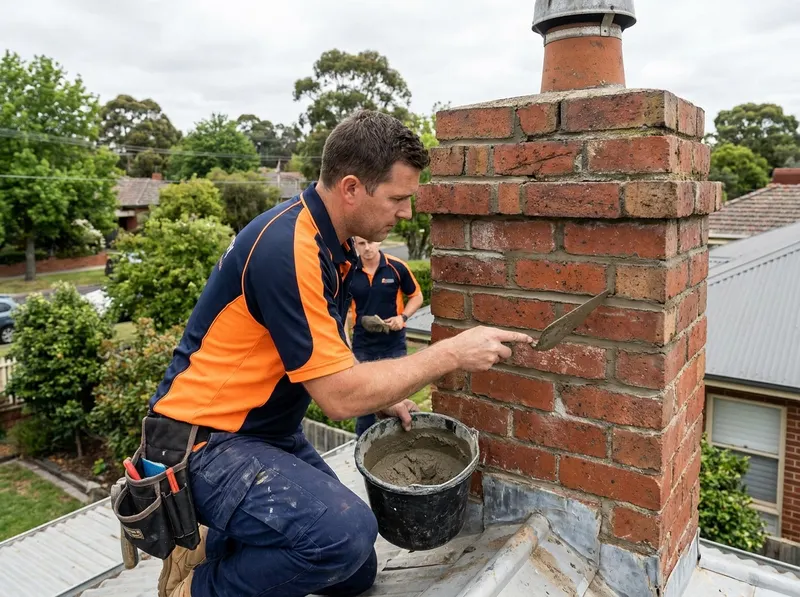
Chimney masonry fails from the top down and from water in. In Charlotte's Central Valley climate, hot dry summers followed by damp winter runs off Cache Creek push moisture into mortar joints that then contract and crack. A chimney crown that has hairline splits will let water sit against the brick until the joints crumble, which is why crown repair and repointing are the two most common jobs here. Repointing (also called tuckpointing) grinds out failed mortar and packs in fresh mortar; it fits chimneys where the brick is still solid but the joints have gone soft or gapped. Brick replacement is the alternative when individual bricks have spalled — the face flaking off from freeze-thaw and trapped water — and no amount of new mortar will hold a crumbling brick.
The decision usually comes down to how far the damage has traveled. Spot repointing and a crown seal make sense on chimneys caught early, common in newer builds around Sunrise Estates and Countryside. Older masonry in Downtown Charlotte, Willow Oak, and Fairview more often needs brick replacement or a full crown rebuild, because decades of Yolo County weather have worked past the surface. The trade-off is straightforward: patch repairs cost less up front but only buy time on a chimney that is genuinely deteriorating, while a rebuild costs more and lasts far longer. An on-site look tells which one you actually need — a crown that only needs sealing shouldn't be sold as a rebuild.
Masonry work pairs naturally with a chimney inspection and often follows one, since cracks and spalling frequently turn up during a routine sweep. Homes near Willow Oak Nature Preserve and Creekside that back onto open ground tend to see more weathering exposure on the stack, and chimneys around Oak Grove and Meadowbrook with older brick benefit from a joint check before winter. Every quote starts with a free on-site assessment: the technician looks at the crown, the joints, the flashing line, and the firebox, then confirms scope and price before any work begins. Call (980) 452-9610 to set that up.
| Minor repointing / spot mortar repair | $150–$450 |
| Chimney crown repair or seal | $250–$650 |
| Full crown rebuild | $600–$1,800 |
| Brick replacement (per section) | $300–$1,200 |
| Firebox mortar / refractory repair | $400–$1,500 |
Most chimney masonry repairs in Charlotte, CA run from a few hundred dollars for spot repointing up into the low thousands for a crown rebuild or brick replacement. The minimum charge is $150, and the exact price is confirmed during a free on-site assessment.
Charlotte chimneys with solid brick but crumbling mortar joints usually need repointing, while chimneys with spalling or broken brick need brick replacement. An on-site look at the joints and brick faces confirms which your chimney requires before any work starts.
Chimney crowns in Charlotte, CA crack from the Central Valley's cycle of hot dry summers and damp winters, which expands and contracts the concrete until hairline splits form. Once a crown cracks, water gets into the masonry below, so crown repair is one of the most common jobs in the area.
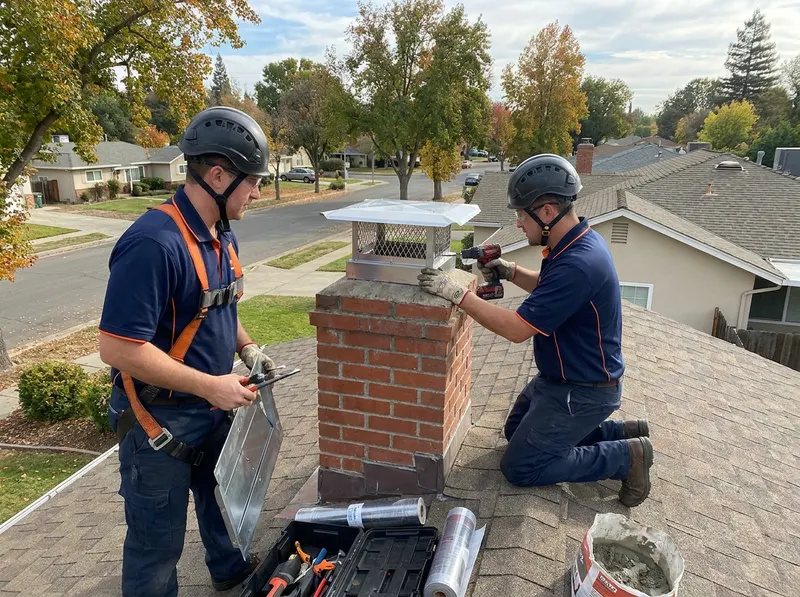
A chimney cap is the single most cost-effective barrier against the problems Charlotte flues face. Winter rain off Cache Creek and the surrounding Yolo County flatlands drives moisture straight down an uncapped flue, and that water accelerates rust on dampers and mortar decay in the smoke chamber. In older Downtown Charlotte homes and the established streets around Willow Oak, we frequently find flues that were never capped or where the original cap has corroded through. A stainless steel cap with a spark-arrestor mesh solves three issues at once: it blocks rain, keeps out the birds and squirrels common near Willow Oak Nature Preserve, and catches sparks before they reach a roof or nearby trees.
Damper choice comes down to how you use the fireplace. A traditional throat damper sits just above the firebox and is fine for occasional fires, but worn throat dampers rarely seal tightly, which lets conditioned air leak year-round. A top-sealing damper mounts at the top of the flue and closes with a rubber gasket, sealing far better and doubling as a cap. For homes in Fairview, Sunrise Estates, and Countryside that run heat through cold valley nights, a top-sealing damper often pays back in reduced draft loss. If you use the fireplace heavily and want simple operation, a repaired or replaced throat damper paired with a separate cap is the practical route.
Every installation starts with a measurement, because caps and dampers are sized to the flue tile or crown opening, not guessed. We check the crown for cracks while we are up there, since a failing crown lets water in around even a good cap. Homes in Oak Grove, Creekside, and Meadowbrook with multiple flues in one stack usually need a single multi-flue cap, which changes the price and the fit. We confirm all of this on the roof before quoting, so the number you get reflects your actual chimney rather than a generic figure. This service pairs naturally with a sweep and inspection if the flue has not been cleaned recently, though a cap or damper can be installed on its own.
| Standard single-flue stainless cap installation | $150 - $300 |
| Multi-flue custom cap | $300 - $650 |
| Top-sealing damper (cap-integrated) | $300 - $550 |
| Throat damper repair or replacement | $150 - $350 |
Chimney cap installation in Charlotte typically runs $150 to $300 for a standard single-flue stainless cap, with multi-flue caps costing more. The $150 minimum applies, and the exact price is confirmed during a free on-site visit.
Most Charlotte chimneys benefit from a cap, because winter rain and wildlife near areas like Willow Oak Nature Preserve enter uncapped flues easily. A cap prevents water damage, blocks birds and squirrels, and arrests sparks.
A chimney cap covers the top of the flue to block rain, animals, and sparks, while a damper seals the chimney from inside to control draft. Many Charlotte homes use a top-sealing damper that combines both functions at the top of the flue.
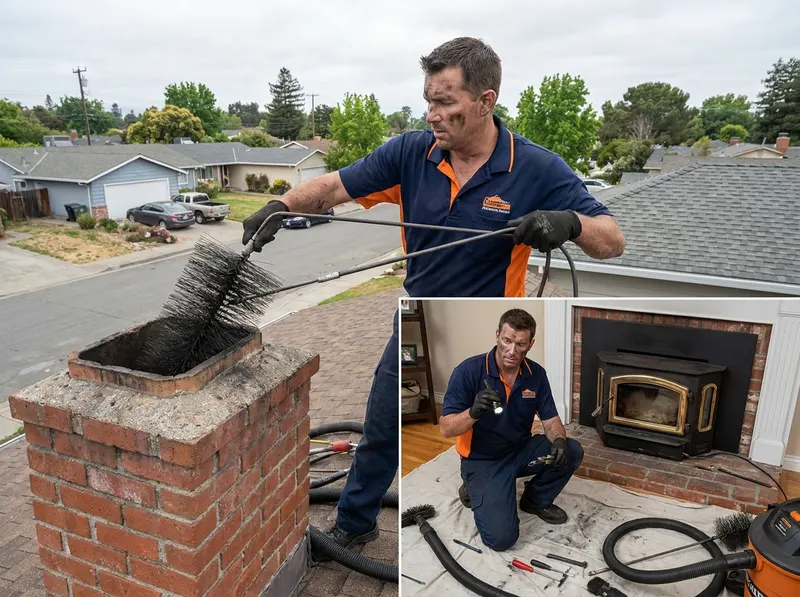
A wood stove is the right choice in Charlotte when you want steady, controllable heat and a defined burn area rather than the open, less efficient draw of a traditional fireplace. Homes in Willow Oak and Fairview often have older masonry fireplaces that lose most of their heat up the flue; a properly sized wood stove insert or freestanding unit captures far more of that heat in the room. The trade-off is that a stove needs the correct flue and clearances, so sizing and a look at your existing chimney come first — an oversized stove in a small Downtown Charlotte living room will run smoky and inefficient, while an undersized one in a large Countryside farmhouse never keeps up on a cold Cache Creek morning.
Service and repair is separate from a new sale and is the more common call. Gaskets flatten and let air leak, which makes a stove hard to control. Firebrick cracks and crumbles over years of hot fires. Door glass clouds or breaks, and baffles warp. These are the parts that keep a stove burning cleanly, and replacing them is far cheaper than replacing the stove. If your stove in Sunrise Estates or Oak Grove is burning through wood fast, leaking smoke at the door, or glowing hotter than it should, those are usually gasket or air-control issues worth checking before you assume the stove is finished.
When you are ready for a new or replacement stove, the on-site visit matters more than any brochure. Room volume, ceiling height, flue diameter, and how the stove vents into the existing chimney all decide which models fit. A replacement in a Creekside or Meadowbrook home often reuses much of the existing chimney and flue, which keeps the job to a single day. A first-time install may need liner or flue work, and that is confirmed in person, never guessed over the phone. Every stove sale here pairs with the sweeping and inspection needed to run it safely through the season.
| Stove service and tune-up (gaskets, air-control check) | $150-$280 |
| Firebrick or baffle replacement | $180-$400 |
| Door glass or gasket replacement | $150-$320 |
| Wood stove supply and installation | quoted per model, confirmed on-site |
| Stove replacement using existing flue | quoted on-site after inspection |
Sizing a wood stove in Charlotte depends on room volume, ceiling height, and how well the home holds heat. A free on-site visit measures the space and checks the flue so the stove matches the room rather than being guessed from square footage alone.
Yes. Most wood stoves in Charlotte are worth repairing rather than replacing. Worn gaskets, cracked firebrick, warped baffles, and clouded door glass are all replaceable parts, and repair starts at the $150 minimum charge.
Yes. Many older masonry fireplaces in Willow Oak and Fairview accept a wood stove insert, which captures far more heat than the open fireplace. The existing chimney and flue are inspected on-site to confirm the insert vents correctly before install.
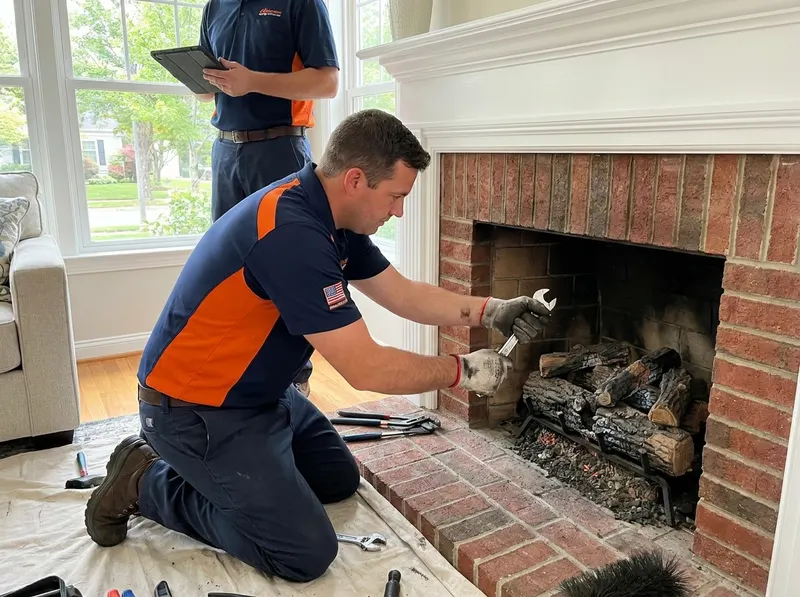
A gas log set fits inside your existing masonry or prefab firebox and burns natural gas or propane through a burner pan under ceramic logs. Vented sets throw the most realistic yellow flame and require the damper to stay open, which suits the older brick fireplaces common in Downtown Charlotte and Fairview homes. Vent-free sets burn cleaner and put nearly all their heat into the room, making them a practical pick for a Sunrise Estates or Countryside home where the fireplace is more about warmth than looks. We measure your firebox on-site before recommending either, because a set sized wrong sits crooked and burns poorly.
Gas logs make sense when you want fireplace ambiance without hauling, storing, and cleaning up cordwood, and without the creosote buildup that comes with burning real logs. The trade-off is upfront cost and a gas line: a wood fire is cheaper to start using but messier to run, while gas logs cost more to install and then run on a valve you turn on and off. Households in Willow Oak and Oak Grove often switch to gas logs after a chimney inspection turns up a flue that is fine for occasional gas use but tired for heavy wood burning.
Service on an already-installed set is the more common call we get. Pilots that won't stay lit, thermocouples that have corroded, burners clogged with dust, and logs that have shifted out of the correct flame pattern are the usual problems. Charlotte's damp winters near Cache Creek and the Willow Oak Nature Preserve can leave a rarely-used set with a stubborn pilot after months idle. We clean the burner ports, verify the gas pressure and connections, reposition the ceramic logs to the manufacturer layout, and confirm the flame burns blue at the base and clean at the tips.
We carry and install standard vented and vent-free sets and can order specialty sizes for oversized fireboxes. If your existing chimney needs a sweep or inspection before a gas conversion, we handle that as a separate service so the flue is confirmed sound first. Every quote is given in person after we see the firebox, gas supply, and venting.
| Gas log service or inspection visit | $150–$250 |
| Pilot / thermocouple repair | $180–$350 |
| Burner cleaning and log repositioning | $150–$275 |
| Vent-free log set supplied and installed | $500–$1,100 |
| Vented log set supplied and installed | $650–$1,400 |
Gas log service in Charlotte starts at our $150 minimum charge for a standard inspection and burner cleaning. A supply-and-install package for a new log set costs more depending on whether you choose a vented or vent-free set; the exact price is confirmed during a free on-site visit.
Vented gas logs give the most realistic flame and suit older open-damper fireplaces common in Downtown Charlotte and Fairview. Vent-free logs put more heat into the room and work well in Countryside and Sunrise Estates homes where warmth matters most. We measure your firebox on-site before recommending either.
Yes. A pilot that won't stay lit is one of the most common gas log calls we get in Charlotte, especially on sets left idle through the damp months near Cache Creek. The cause is usually a corroded thermocouple or a dirty pilot orifice, both of which we service on-site.
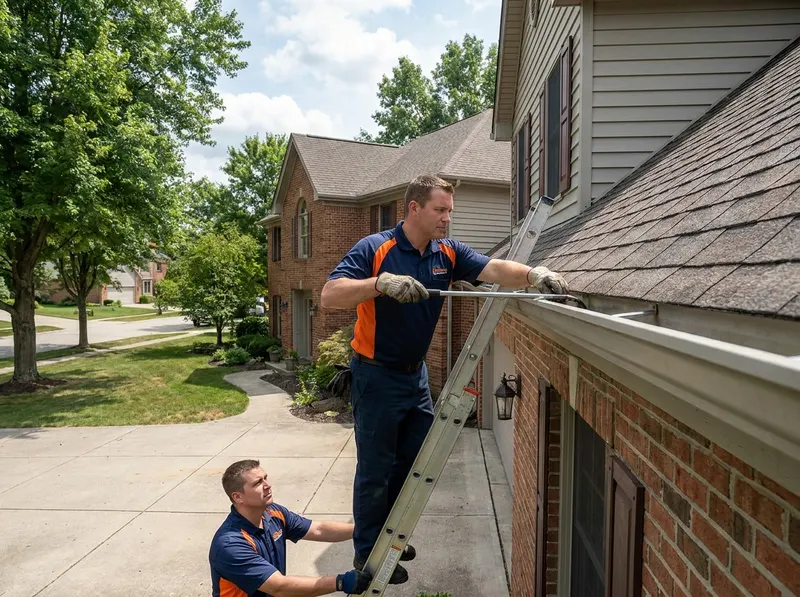
Charlotte's tree cover drives most gutter problems here. The mature valley oaks around Willow Oak and Oak Grove drop leaves, catkins and acorns that pack into gutters and turn to a heavy sludge after the first fall rains. Homes near Willow Oak Nature Preserve and along Cache Creek collect the most organic debris, while newer builds in Sunrise Estates and Countryside tend to see finer roof grit and windblown seed pods instead of full leaf mats. Clearing gutters before the wet season keeps water moving to the downspouts rather than spilling over fascia boards.
Gutter cleaning fits when your gutters are overflowing, sagging, or growing plants, or when water sheets down exterior walls during rain. It is the right first step before you consider gutter guards or repairs, since a clear inspection shows what's actually happening. The trade-off is that cleaning is maintenance, not a permanent fix: heavily wooded lots in Fairview, Creekside and Meadowbrook often need clearing once or twice a year, while more open properties Downtown Charlotte may go longer between visits. We flush each downspout after clearing so you know the whole run drains, not just the visible troughs.
We pair gutter work with our chimney and roof services when it makes sense, which saves a second setup fee for households already booking a sweep. If we spot loose flashing, detached gutter sections or rot on the fascia while we're up there, we tell you plainly and note it so you can plan repairs — we do not invent problems or pressure add-ons. Every quote is confirmed on site because roof pitch, height and how long the gutters have gone uncleared all change the time involved.
| Single-story gutter cleaning (Charlotte) | $150–$250 |
| Two-story gutter cleaning | $250–$400 |
| Heavy oak-debris clearing (wooded lots) | $275–$450 |
| Gutter cleaning added to a chimney sweep visit | from $150 |
| Downspout flush and unclog only | $150–$225 |
Most Charlotte homes need gutter cleaning once or twice a year. Heavily wooded lots in Fairview, Creekside and near Willow Oak Nature Preserve often need it twice — before and after fall — while more open properties Downtown Charlotte can usually go once a year.
Yes. Because our Charlotte crews already work at roof height for chimney jobs, we can clear gutters on the same visit, which avoids a second setup and keeps the overall cost lower for households in Oak Grove, Countryside and beyond.
Gutter cleaning in Charlotte starts at a $150 minimum. The final price depends on roof height, total gutter length and how much debris has built up, and we confirm the exact figure with a free on-site look before starting.
If you burn wood and haven't had the flue looked at in a year or more, choose a full cleaning with a Level 1 inspection — that clears the creosote that causes chimney fires and confirms the liner is intact. If you're buying a home or have never had the system checked, choose a Level 2 inspection, which adds a camera scan of the flue interior to catch hidden cracks. If you only run gas logs, choose gas appliance service instead of a wood-flue sweep, since gas systems foul differently and need burner and venting checks rather than heavy brushing. If your chimney is staining the ceiling or dripping after rain, that's a leak call, not a cleaning — start with an inspection to find whether it's the crown, flashing, or a missing cap. The trade-off is straightforward: a basic sweep is the cheapest and fastest visit, while inspections and repairs cost more but catch the problems that a brush alone will never fix.
| On-site minimum charge | $150 |
| Chimney cleaning + Level 1 inspection | $150–$300 |
| Level 2 inspection (camera scan) | $250–$500 |
| Chimney cap installation | $200–$450 |
| Crown or flashing leak repair | $300–$1,200 |
| Masonry repointing / restoration | $500–$3,000+ |
| Stainless steel relining | $2,000–$5,000+ |
| Gas log service / cleaning | $150–$350 |
| Wood stove cleaning & service | $175–$400 |
| Gutter cleaning (add-on with chimney work) | $150–$350 |
Your exact price is confirmed before any work begins.
Charlotte sits in Yolo County near Cache Creek, and the wet winter storm bands that sweep through here drive rain sideways into any chimney with a cracked crown or a missing cap — which is why leak calls spike right after the first big system of the season. Older masonry stacks around Downtown Charlotte and Countryside have weathered decades of hot summers and damp winters, opening mortar joints that let water in long before an interior stain appears. Fall foliage from the Willow Oak Nature Preserve canopy also fills gutters and can leave debris on rooflines near Charlotte Community Park, so we often clear both the flue and the gutters in one visit.
Neighborhoods we cover: Downtown Charlotte, Willow Oak, Fairview, Sunrise Estates, Oak Grove, Creekside, Meadowbrook, Countryside.
A routine chimney cleaning with a Level 1 inspection in Charlotte runs a ballpark $150 to $300. The on-site minimum charge is $150, and we confirm the exact price before any work begins based on flue count, buildup, and access. Repairs and relining are quoted separately after an inspection.
Most Charlotte homeowners who burn wood should have the chimney swept and inspected once a year, typically before the fall burning season. Heavy burners or homes using unseasoned wood may need it sooner, since creosote builds faster. Gas fireplaces need annual service too, but the focus is burner and venting rather than heavy brushing.
Demand in Charlotte peaks in fall from September through November as homeowners prep fireplaces, so booking 2 to 4 weeks ahead is smart for October and November. Late spring and summer offer shorter waits and are the ideal window for relining and masonry repairs before the next heating season.
Chimney leaks in Charlotte usually trace to a cracked crown, failed flashing where the stack meets the roof, a missing cap, or eroded mortar joints, all of which let wind-driven rain from Cache Creek storm bands find its way in. An inspection pinpoints the source, and the fix ranges from a new cap to crown and flashing repair rather than a full rebuild in most cases.
Yes. We service gas log sets and gas fireplaces with burner and venting checks, and we clean and service wood stoves and inserts throughout Charlotte and the surrounding Yolo County neighborhoods. Gas and wood systems get different visits because they foul and vent differently. Call (980) 452-9610 or text a photo of your setup and we'll tell you which service fits.